Structured Literacy in Action: How Evidence-Based Instruction Drove Reading Growth in My Classroom


This year, my classroom has experienced measurable reading growth that reflects more than students working hard; it reflects the impact of full implementation of Structured Literacy and evidence-based instructional practices. Delivered intentionally, consistently, and with high expectations for every learner, these routines produced accelerated progress across my classroom, including students with IEPs in a co-taught special education setting.
Structured Literacy is not a trend. It is a research-aligned approach that ensures students receive the explicit instruction they need to become fluent readers, strong thinkers, and confident communicators. The growth I observed was not accidental; it was the result of purposeful changes to how literacy instruction was designed and implemented in the classroom, through explicitly teaching fluency, vocabulary, comprehension, and writing every single day.
What the Data Shows: A Shift in Learning Trajectory
To understand the impact of instructional shifts in this third-grade classroom, student growth was examined using two complementary measures: the i-Ready Diagnostic, administered at the beginning and middle of the year, and Oral Reading Fluency (ORF) benchmarks collected in the fall and winter. Together, these data sources capture both overall reading achievement and the foundational fluency skills that support comprehension.
Across both measures, the results point to a clear and consistent pattern: students are not just growing—they are accelerating.
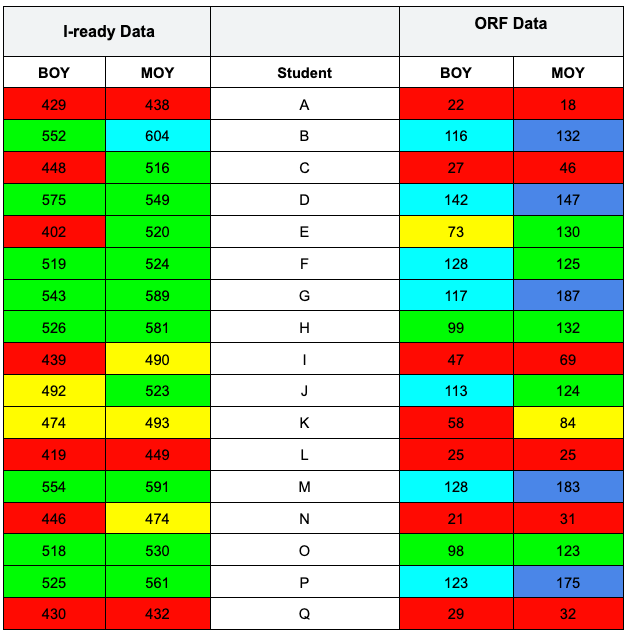
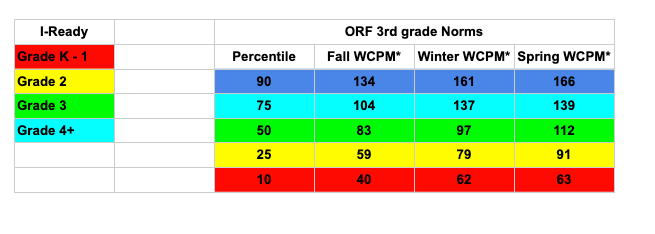
On the I-Ready Diagnostic, students demonstrated an average gain of approximately 35 points in one semester, yielding an effect size of 0.61. In educational research, an effect size of 0.40 is often considered typical for an entire year of growth. Growth at this magnitude, achieved by midyear, falls within John Hattie’s zone of desired effects and signals instruction that is producing a strong, meaningful impact.
The ORF data mirrors this accelerated progress. From fall to winter, students increased their average reading rate by 23.4 words correct per minute, exceeding national expectations for third grade during this time frame. National norms suggest fall-to-winter growth of approximately 12–20 words; this cohort surpassed that range, with an ORF effect size of 0.50 in just one instructional window.
Perhaps the most compelling evidence of impact is seen among students who began the year with the greatest need. On I-Ready, 7 out of 17 students, or 41%, of the class started in the Red performance range, meaning they were at least two grade levels behind in instruction. By midyear, only 3 of the 17 students, or 18%, remain in the Red performance range on their I-ready score, demonstrating that the instructional routines in place were effective in accelerating learning for students who started furthest behind.
Taken together, the ORF and I-Ready data tell a unified story. Explicit fluency instruction strengthened students’ automaticity and accuracy, while structured vocabulary, comprehension, and writing routines supported deeper reading growth. The result is not simply steady progress, but a shift in trajectory, one that brings more students into grade-level expectations and positions them to sustain growth over time.
Explicit Fluency Instruction: Building Automaticity With Purpose
One of the most significant shifts I made in my instruction was redefining fluency as a skill that must be explicitly taught, rather than something students are expected to “pick up” naturally over time.
To do this, I implemented dyad reading, a structured partner-based approach where students work in pairs to read aloud together. In this strategy, one student reads while the other listens, provides support, and models fluent reading when needed; roles are then rotated so both students practice reading and supporting. I created fluency passages that were carefully aligned to the genre, topic, and essential question of the main text we were studying, ensuring that fluency practice reinforced comprehension rather than being separate from it. To further deepen learning, I embedded key vocabulary words from the main text into the fluency passages, giving students repeated, meaningful exposure to academic language in context. Students read these passages daily, which provided consistent opportunities to practice accuracy, expression, phrasing, and appropriate pacing, while also strengthening vocabulary and comprehension skills.
By integrating these elements, fluency instruction became more than a focus on reading speed; it evolved into a bridge connecting decoding skills, vocabulary knowledge, and meaningful comprehension, helping students engage with complex texts with confidence and deeper understanding.
Vocabulary Instruction That Sticks
Vocabulary development is one of the strongest predictors of reading comprehension, making it essential for students to not only recognize words but truly understand and use them across contexts. I shifted toward explicit, daily, and meaningful vocabulary instruction so that students didn’t simply memorize words for a worksheet; they learned to accurately apply them in reading, speaking, and writing. This approach aligns with Sean Morissey’s Word Mapping Project, which emphasizes multiple, purposeful exposures to words, teaching students to connect words to their meanings, morphology, and context. By helping students see how words are structured and related to other words, the Word Mapping framework supports deeper, more lasting understanding.
A key routine I implemented was example/nonexample instruction, a strategy strongly supported by Anita Archer’s explicit vocabulary routines. This method helps students learn what a word means and, just as importantly, what it does not mean. By carefully selecting nonexamples, I could reinforce target words from the text while also introducing secondary vocabulary, allowing students to refine their understanding of nuanced word meanings. Students then applied these words in weekly sentence-writing practice and consistently used them during text-based discussions, supported by sentence stems to scaffold academic language. This combination of direct instruction, guided practice, and active use reflects Archer’s emphasis on making vocabulary learning systematic, intentional, and interactive.
Repeated, purposeful exposure across multiple contexts helped vocabulary become something students truly owned, rather than something they temporarily remembered for a worksheet. I now hear my students using newly learned vocabulary throughout the school day and across other content areas, demonstrating transfer and mastery. They take pride in finding new situations to use words correctly, and the energy in the classroom has shifted, students are excited to explore language, and I love seeing their confidence and curiosity grow. By combining explicit routines with meaningful, context-driven practice, vocabulary instruction became a bridge to stronger comprehension, richer discussion, and more confident, capable readers, directly supporting the research-backed practices of both Morissey and Archer.
Explicit Text Comprehension: Grade-Level Reading With Full Participation
Rather than simply “covering” texts, students engage daily with grade-level passages while I explicitly teach the genre, structure, and purpose of each text. Instruction is designed so that students do the cognitive and reading work, not the teacher. Through routines such as choral reading and partner reading, every student is actively involved in reading the text, ensuring consistent practice with accuracy, fluency, and comprehension. This shared responsibility for reading ensures that all students, not just the most confident readers, have repeated opportunities to build essential reading skills.
Comprehension instruction is structured as a whole-class routine grounded in participation and accountability. I intentionally increase both the frequency and quality of questioning by directing questions to the entire class rather than calling on a single student. Every student is expected to think, respond, and articulate their understanding, there is no opting out of learning. Students routinely discuss their answers with partners or as a class before writing, which strengthens comprehension by allowing them to clarify ideas, hear multiple perspectives, and refine their thinking before independent work.
These structured discussions deepen understanding, strengthen oral language, and build confidence, especially for students who need additional support and benefit from hearing peer thinking before sharing their own. The reading block is no longer quiet or passive; it is active, language-rich, and highly engaging for every learner.
Explicit Sentence-Level Writing: Strengthening Reading Through Writing
Writing instruction is intentionally focused at the sentence level because strong sentence work strengthens multiple literacy skills at the same time: vocabulary development, reading comprehension, and language structure. Rather than treating writing as a separate skill that happens after reading, sentence-level practice becomes a daily tool students use to process what they read, communicate their thinking clearly, and build the academic language they need for grade-level success. To strengthen this work, I intentionally incorporate strategies from The Writing Revolution, which emphasizes that students become stronger writers through explicit, systematic sentence-level instruction.
Students regularly engage in sentence expansion and sentence combining, and we use structured tools such as “because, but, so” to help students explain their thinking with clarity and stronger reasoning. I also incorporate Writing Revolution-style activities like fragments to full sentences, appositives, and sentence stems to help students write in response to text using complete, organized language. Students intentionally embed text-based vocabulary into their writing so that vocabulary instruction transfers into both speaking and written expression. These routines allow students to build writing stamina and clarity without being overwhelmed by the demands of long responses too early.
Before students begin writing, we discuss answers and rehearse ideas orally to strengthen reasoning and improve clarity. This step ensures students understand the text, have something meaningful to say, and feel prepared to put their thinking into words. After writing, we return to student sentences together and provide immediate feedback on structure, meaning, and vocabulary use, reinforcing what strong sentences sound like and how precise language strengthens communication. I also intentionally break down complex sentences from grade-level texts so students can see how meaning is built through syntax and structure. This helps students access challenging text more confidently and apply those same language patterns in their own writing, strengthening both comprehension and written expression.
Final Reflection
Structured Literacy is not about doing “more.” It is about doing what works,explicitly, consistently, and with purpose. By implementing routines for fluency, vocabulary, comprehension, and sentence-level writing, I am able to accelerate student growth across all levels in my co-taught classroom.
With these structured literacy routines firmly in place, I spend less time on weekly planning and can focus more on delivering high-quality instruction and responding to student needs in the moment, rather than worrying about what I need to teach next. This has increased instructional clarity, consistency, and impact.
The results are visible not only in the data, but also in students’ reading behaviors, confidence, and willingness to engage with grade-level text every day. Structured Literacy has transformed both the learning experience for students and the teaching experience for me, proving that when evidence-based practices are implemented with fidelity, every student can achieve meaningful growth.
 | A guest post by
|
I appreciate how clearly you resist two common traps at once:
treating Structured Literacy as a checklist rather than a system
separating “foundational skills” from meaning, language, and thinking
Your fluency work reinforces knowledge and vocabulary. Your sentence-level writing deepens comprehension. Your discussions ensure every student does the cognitive work. That integration is where acceleration happens—especially for students who start furthest behind.
Fantastic work here. The effect size of 0.61 at midyear is genuinely impressive becasue most interventions dont clear 0.40 for a full year. What stands out is how the vocabulary integration with fluency passages creates dual exposure, wich I saw work similarly in a pilot program where struggling readers gained more from layred practice than isolated drills. The ORF gains above national norms validate the whole approach.