Student-Generated Questions: Why I Use Them and How I Scaffold Them


Last year, through her Goyen Literacy Fellowship, reading interventionist Catlin Goodrow shared her work in a series of informative and resource-ful Twitter/X threads. This summer, in attempt to give them a semi-permanent home, we are going to reshare them on this blog. Next up: student-generated questions. And if you like Catlin’s work, pre-order her book about helping older elementary school students access complex texts!
Student-generated questions are my absolute favorite! Here I'm talking through a couple of questions my students asked to get meta about how we answer them.
Generating questions was highlighted all the way back in the National Reading Panel, but the era of standards-based accountability has led to a lot of focus on students' answering questions posed by the teacher (TDQs, anyone?).
Generating questions while reading has lots of benefits, including increased motivation, active processing, and self-monitoring. Here’s a slide from a presentation I co-wrote back in the Reading First days.
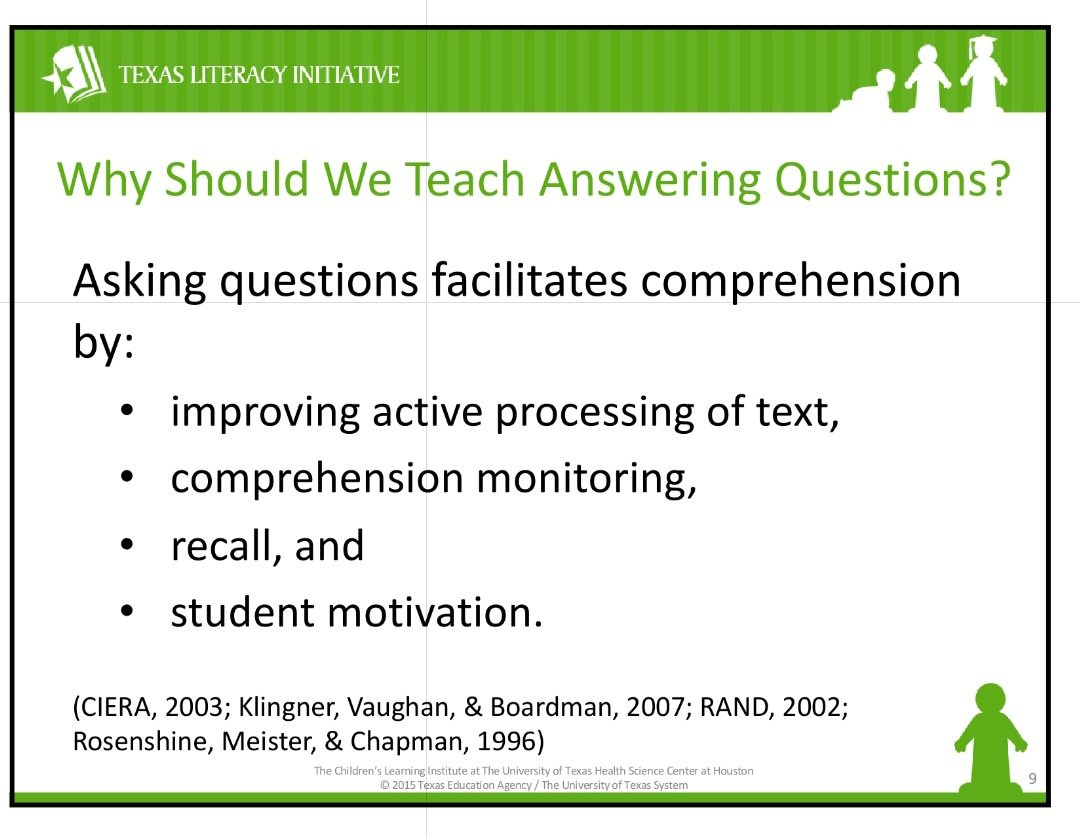
I also consider supporting students questioning of text to be an equity issue, because they learn that text does not necessarily have authority simply because it is text.
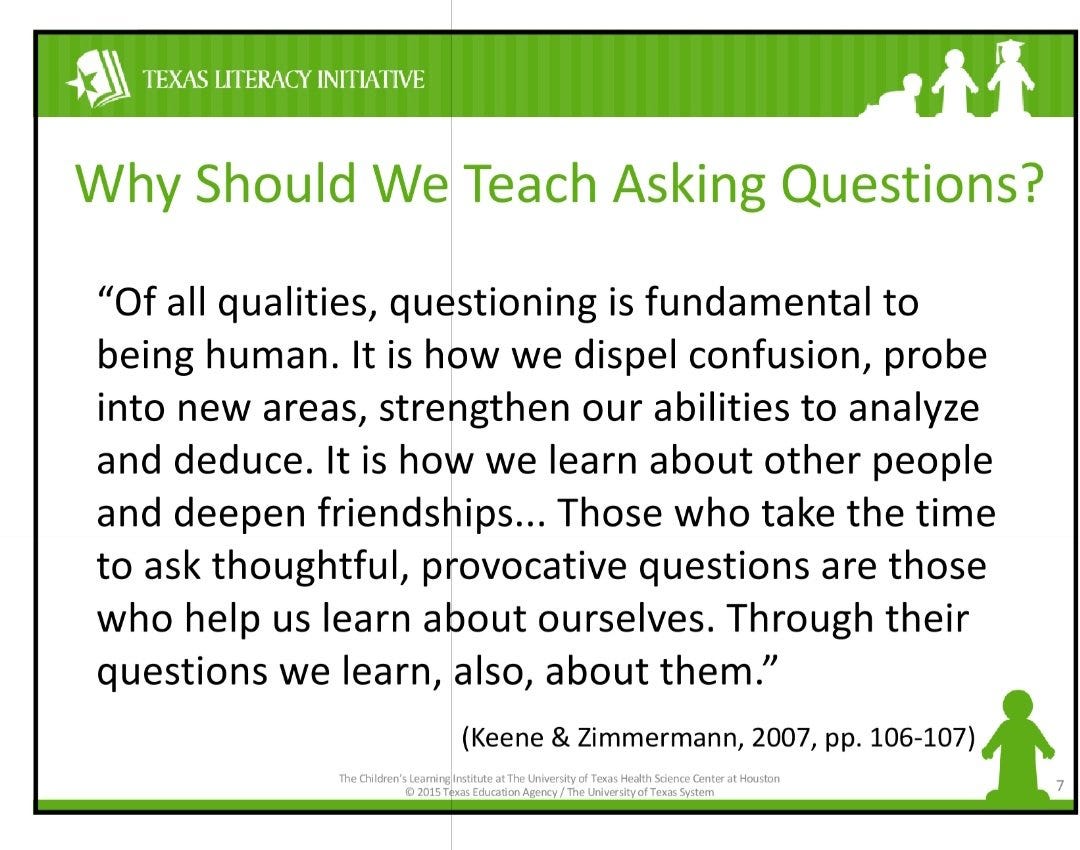
So that’s the why. Here’s how I get students generating questions.
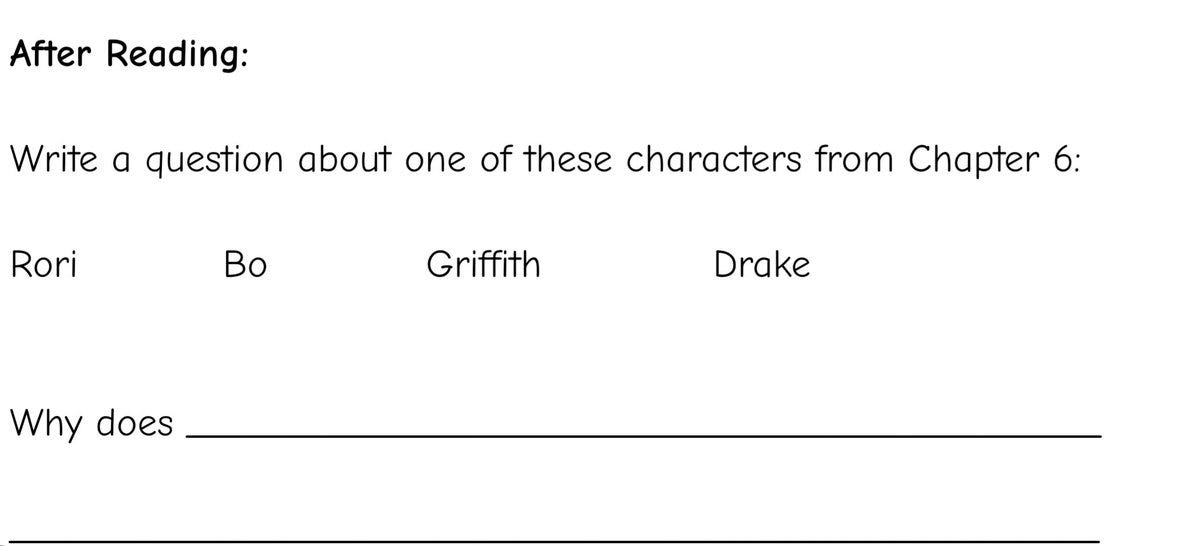
Initially, I ask students to generate specific types of questions (e.g. a question about a character) as they build understanding of what types of questions they might ask and which spark good discussions.
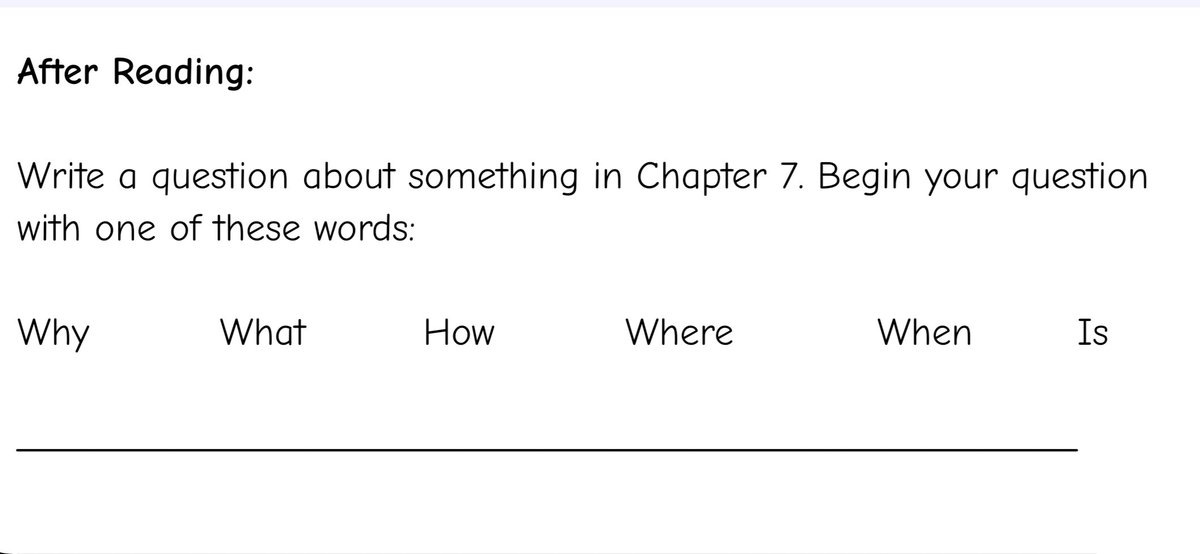
Later, I ask for more general questions.
You might sometimes be surprised by your students' questions. You might even think "what the heck?" But you can't really tell, from an adult perspective, which questions will deepen understanding, so I just roll with them. For example, '“why is the owl giving the mouse side eye?"…
This question sparked a great discussion that had students re-entering the text and having mini a-has. (The owl was going to eat the mouse, of course).
And you want to read a study (from 1998!) that has influenced my thinking, check it out!
 | A guest post by
|
Do you have any suggestions of resources to use for the middle school population? What would you suggest in getting this age group to ask good questions since I find 8th graders lack understanding between bad and good questions? Thanks.